
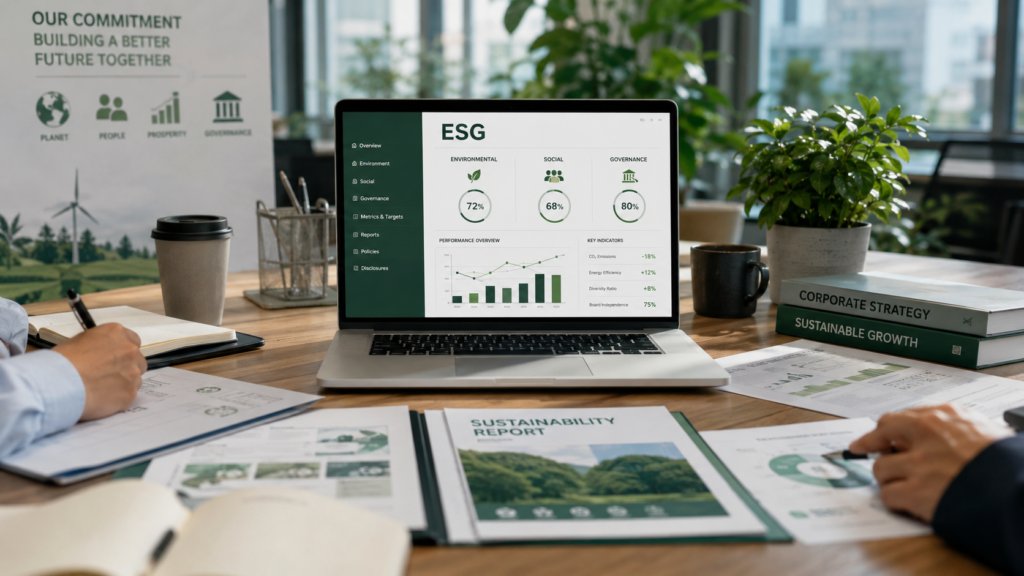
ESG has become an important part of how organizations are assessed, trusted, and expected to grow. It stands for Environmental, Social, and Governance, three areas that show how an organization manages its impact, responsibility, and long-term risks.
For many companies and institutions, ESG is often associated with reporting, compliance, or investor expectations. But in practice, ESG is broader than that. It helps organizations understand how environmental issues, social responsibility, and governance practices are connected to business performance and public trust.
The environmental aspect looks at how an organization manages its relationship with nature. This may include energy use, waste management, emissions, resource efficiency, biodiversity, and environmental risk. Organizations that pay attention to these issues are better prepared to face climate-related challenges and regulatory expectations.
The social aspect focuses on people. It includes employees, communities, customers, suppliers, and other stakeholders affected by the organization’s activities. Strong social practices can be seen through fair labor practices, community engagement, human rights awareness, health and safety, inclusion, and meaningful social impact programs.
Governance is about how an organization is directed and controlled. It includes transparency, ethics, accountability, risk management, leadership commitment, and decision-making processes. Good governance provides the foundation for credible ESG practices.
ESG matters because organizations today are expected to be more transparent and responsible. Stakeholders want to know not only what an organization produces, but also how it operates, how it treats people, how it manages risks, and how it contributes to society.
A good ESG approach can help organizations identify material issues, reduce risks, improve stakeholder relationships, and strengthen reputation. It also helps leaders make better decisions by considering long-term impacts, not only short-term results.
However, ESG should not be treated as a checklist. It needs to be integrated into strategy, operations, and organizational culture. Without clear direction, ESG initiatives may become scattered or symbolic. With the right approach, ESG can become a practical framework for improving performance and creating long-term value.
For organizations starting their ESG journey, the first step is to understand their context. What are the most relevant environmental, social, and governance issues? Who are the key stakeholders? What risks and opportunities need to be managed? What programs and indicators can be developed?
From there, organizations can build a roadmap, define priorities, strengthen governance, engage stakeholders, and measure progress. ESG is not about doing everything at once. It is about taking the right steps based on relevance, capacity, and impact.
In the end, ESG matters because it helps organizations become more responsible, resilient, and trusted. It connects business objectives with social and environmental responsibility.
For today’s organizations, ESG is no longer an additional agenda. It is part of how long-term value is built. #